
1950s Basketball Pioneers: Breaking Racial Barriers
Support Us By Sharing!


The Evolution of Professional Basketball and the End of Segregation
In the early days of professional basketball, the sport mirrored the societal norms of segregation prevalent across the United States. African American players were systematically excluded from major leagues, leading to the formation of all-black teams known as the “Black Fives.” These teams showcased immense talent and passion, laying the groundwork for future integration.

The watershed moment arrived in 1950 when the National Basketball Association (NBA) began to dismantle its racial barriers. This pivotal change not only transformed the dynamics of the game but also challenged the deeply entrenched discriminatory practices of the era. As we observe international day for the elimination of racial discrimination, it’s essential to honor the trailblazing athletes who, through resilience and excellence, paved the way for future generations.

Pioneers Who Broke Barriers in the 1950s
The 1950s marked a significant turning point in professional basketball, with several African American athletes making indelible marks on the sport. Here, we celebrate ten of these pioneers, delving into their backgrounds, the challenges they faced, and their remarkable achievements.
1. Earl Lloyd

Date of Birth: April 3, 1928
Hometown: Alexandria, Virginia
“You’re an athlete…Once you make that team, you’re a basketball player”
– Earl Lloyd
Earl Francis Lloyd grew up in a segregated Alexandria, where opportunities for African Americans were limited. Despite societal challenges, he showcased exceptional talent on the basketball court during his high school years. His prowess earned him a scholarship to West Virginia State College, a historically Black institution, where he led the team to two Central Intercollegiate Athletic Association (CIAA) championships.
In 1950, Lloyd was selected by the Washington Capitols in the ninth round of the NBA Draft. On October 31, 1950, he became the first African American to play in an NBA game, a historic debut that occurred one day before Chuck Cooper’s first appearance. Lloyd’s entry into the league was met with racial hostility, including jeers from spectators and discrimination during team travels. Nevertheless, he remained undeterred, focusing on his performance and breaking down racial barriers in professional basketball.
Career Highlights:
| Season | Team | Games Played | Points Per Game | Rebounds Per Game | Assists Per Game |
|---|---|---|---|---|---|
| 1950-51 | Washington Capitols | 10 | 6.1 | 6.4 | 1.0 |
| 1952-58 | Syracuse Nationals | 368 | 8.9 | 6.4 | 1.4 |
| 1958-60 | Detroit Pistons | 110 | 5.5 | 4.7 | 1.2 |
Fun Fact: Beyond his playing career, Lloyd made history again by becoming the first African American assistant coach in the NBA with the Detroit Pistons.
2. Chuck Cooper

Date of Birth: September 29, 1926
Hometown: Pittsburgh, Pennsylvania
Charles Henry “Chuck” Cooper was raised in Pittsburgh’s North Side, where he developed a passion for basketball at an early age. He attended Westinghouse High School and later Duquesne University, becoming one of the first African American players to captain a major college team. His exceptional skills and leadership on the court garnered national attention.
In the 1950 NBA Draft, the Boston Celtics selected Cooper in the second round, making him the first African American player drafted into the NBA. His selection was a bold move, challenging the league’s unwritten rules against integrating teams. Cooper faced racial prejudice from fans and opposing players alike, but his determination and talent spoke volumes, helping to pave the way for future African American athletes in professional basketball.
Career Highlights:
| Season | Team | Games Played | Points Per Game | Rebounds Per Game | Assists Per Game |
|---|---|---|---|---|---|
| 1950-54 | Boston Celtics | 324 | 6.6 | 5.9 | 1.8 |
| 1954-55 | Milwaukee/St. Louis Hawks | 66 | 6.1 | 5.8 | 1.6 |
| 1955-56 | Fort Wayne Pistons | 19 | 5.7 | 5.5 | 1.5 |
Fun Fact: After retiring from basketball, Cooper earned a Master’s degree in Social Work from the University of Minnesota and became Pittsburgh’s first African American department head, serving as the city’s Director of Parks and Recreation.
3. Nat “Sweetwater” Clifton

“Being the only black on the team, I always figured the reason I didn’t get the ball more is because the other fellows were looking out for themselves”
– Nat “Sweetwater” Clifton
Date of Birth: October 13, 1922
Hometown: Little Rock, Arkansas
Nathaniel “Sweetwater” Clifton was born in Little Rock but grew up in Chicago, where he excelled in multiple sports, including basketball and baseball. Before joining the NBA, Clifton played for the Harlem Globetrotters, captivating audiences with his athleticism and charisma.
In 1950, the New York Knicks purchased Clifton’s contract from the Globetrotters, making him one of the first African Americans to sign a NBA contract. His transition from the entertainment-focused Globetrotters to the competitive NBA was groundbreaking, challenging stereotypes and opening doors for future players of color.
Career Highlights:
| Season | Team | Games Played | Points Per Game | Rebounds Per Game | Assists Per Game |
|---|---|---|---|---|---|
| 1950-51 | New York Knicks | 65 | 8.6 | 7.6 | 2.5 |
| 1951-52 | New York Knicks | 62 | 10.6 | 11.8 | 3.4 |
| 1952-53 | New York Knicks | 70 | 10.6 | 10.9 | 3.3 |
| 1953-54 | New York Knicks | 72 | 9.6 | 7.3 | 2.4 |
| 1954-55 | New York Knicks | 72 | 13.1 | 8.5 | 2.8 |
| 1955-56 | New York Knicks | 72 | 10.2 | 7.6 | 2.5 |
| 1956-57 | New York Knicks | 72 | 9.0 | 7.0 | 2.3 |
| 1957-58 | Detroit Pistons | 59 | 6.9 | 5.9 | 1.8 |
Fun Fact: Before his NBA career, Clifton played for the Harlem Globetrotters, where he was known for his showmanship and athleticism. His nickname, “Sweetwater,” was given due to his love for soft drinks during his youth.
4. Hank DeZonie

Date of Birth: February 12, 1922
Hometown: Harlem, New York
Henry Lincoln “Hank” DeZonie was born and raised in Harlem, New York. He developed his basketball skills on the playgrounds of the city and later played for Xavier University of Louisiana, a historically Black university. DeZonie also played for several Black professional teams, including the New York Rens and the Dayton Rens.
In 1950, DeZonie signed with the Tri-Cities Blackhawks, becoming one of the first African Americans to play in the NBA. His tenure in the league was brief, spanning only five games, but his presence challenged the status quo and contributed to the integration of professional basketball.
Career Highlights:
| Season | Team | Games Played | Points Per Game | Rebounds Per Game | Assists Per Game |
|---|---|---|---|---|---|
| 1950-51 | Tri-Cities Blackhawks | 5 | 3.4 | — | — |
Fun Fact: After his short stint in the NBA, DeZonie continued to play basketball in independent leagues and later became a successful businessman in New York City.
5. Don Barksdale

Date of Birth: March 31, 1923
Hometown: Oakland, California
Donald Argee Barksdale was born in Oakland, California. He attended Berkeley High School but was initially cut from the basketball team due to a coach’s racial bias. Undeterred, Barksdale honed his skills in local AAU leagues and later played for UCLA, becoming the school’s first African American basketball player.
In 1951, Barksdale signed with the Baltimore Bullets, becoming the first African American to play in the NBA All-Star Game in 1953. Throughout his career, he faced racial discrimination but remained a trailblazer, breaking multiple color barriers in the sport.
Career Highlights:
| Season | Team | Games Played | Points Per Game | Rebounds Per Game | Assists Per Game |
|---|---|---|---|---|---|
| 1951-52 | Baltimore Bullets | 66 | 12.0 | 8.6 | 2.1 |
| 1952-53 | Baltimore Bullets | 68 | 13.8 | 9.6 | 2.3 |
| 1953-54 | Boston Celtics | 70 | 11.3 | 7.7 | 2.2 |
| 1954-55 | Boston Celtics | 60 | 9.6 | 6.1 | 1.8 |
Fun Fact: After retiring from basketball, Barksdale became a successful radio DJ and music promoter, contributing significantly to the Bay Area’s music scene.
6. Jim Tucker

“In my era, pro ball was just coming along”
-Jim Tucker
Date of Birth: December 3, 1932
Hometown: Paris, Kentucky
James D. Tucker was born in Paris, Kentucky. He played college basketball at Duquesne University, where he was a standout player, helping lead the team to a National Invitation Tournament (NIT) championship in 1955.
In 1954, Tucker was drafted by the Syracuse Nationals. He, along with teammate Earl Lloyd, became the first African American to play on a NBA championship team in 1955. Tucker faced the challenges of being one of the few Black players in the league during a time of significant racial tension.
Career Highlights:
| Season | Team | Games Played | Points Per Game | Rebounds Per Game | Assists Per Game |
|---|---|---|---|---|---|
| 1954-55 | Syracuse Nationals | 31 | 4.1 | 3.5 | 0.7 |
| 1955-56 | Syracuse Nationals | 28 | 5.0 | 4.2 | 0 |
Fun Fact: On March 21, 1955, Tucker recorded the fastest triple-double in NBA history, achieving 12 points, 10 rebounds, and 12 assists in just 17 minutes—a record that still stands.
7. Maurice Stokes

“He was Elgin Baylor and Michael Jordan before those guys came along“
– This quote, attributed to Jack Twyman
Date of Birth: June 17, 1933
Hometown: Pittsburgh, Pennsylvania
Maurice Stokes was a standout athlete at Westinghouse High School in Pittsburgh. He attended Saint Francis College (now Saint Francis University) in Loretto, Pennsylvania, where he became a three-time All-American and set numerous school records.
Drafted by the Rochester Royals in 1955, Stokes quickly established himself as one of the NBA’s premier players, earning Rookie of the Year honors. Despite playing in an era of segregation, he was celebrated for his versatility and athleticism. Tragically, his career was cut short in 1958 when he suffered a head injury during a game, leading to post-traumatic encephalopathy, which left him paralyzed.
Career Highlights:
| Season | Team | Games Played | Points Per Game | Rebounds Per Game | Assists Per Game |
|---|---|---|---|---|---|
| 1955-56 | Rochester Royals | 66 | 16.8 | 16.3 | 4.9 |
| 1956-57 | Rochester Royals | 72 | 19.0 | 17.4 | 5.1 |
| 1957-58 | Cincinnati Royals | 72 | 16.9 | 18.1 | 6.4 |
Fun Fact: Stokes was inducted into the Naismith Memorial Basketball Hall of Fame in 2004, honoring his significant impact on the game despite his brief career.
8. Willie Naulls

Date of Birth: October 7, 1934
Hometown: Dallas, Texas
Willie Naulls moved to California during his youth, where he became a basketball star at San Pedro High School. He played college basketball at UCLA under coach John Wooden, earning All-American honors in 1956.
Naulls was selected by the St. Louis Hawks in the 1956 NBA Draft but was traded to the New York Knicks early in his rookie season. He became one the first African Americans to be named captains of a major professional sports team. Throughout his career, Naulls faced and overcame racial prejudices, establishing himself as a consistent and reliable player.
Career Highlights:
| Season | Team | Games Played | Points Per Game | Rebounds Per Game | Assists Per Game |
|---|---|---|---|---|---|
| 1956-57 | New York Knicks | 70 | 12.8 | 7.9 | 1.3 |
| 1957-58 | New York Knicks | 72 | 15.8 | 11.4 | 1.5 |
| 1958-59 | New York Knicks | 72 | 19.3 | 11.7 | 2.0 |
| 1959-60 | New York Knicks | 75 | 19.8 | 10.7 | 2.1 |
| 1960-61 | New York Knicks | 79 | 23.4 | 12.4 | 2.6 |
Fun Fact: Naulls was part of the Boston Celtics team that featured the NBA’s first all-Black starting lineup in 1964.
9. Cleo Hill
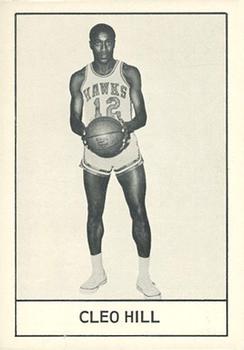
Date of Birth: May 31, 1938
Hometown: Newark, New Jersey
Cleo Hill was a standout player at South Side High School in Newark. He attended Winston-Salem State University, where he played under legendary coach Clarence “Big House” Gaines and became one of the nation’s leading scorers.
Hill was selected eighth overall by the St. Louis Hawks in the 1961 NBA Draft, making him one of the first players from a historically Black college to be drafted in the first round. Despite his talent, Hill faced significant racial discrimination, including limited playing time and conflicts with teammates and management, leading to a brief NBA career.
Career Highlights:
| Season | Team | Games Played | Points Per Game | Rebounds Per Game | Assists Per Game |
|---|---|---|---|---|---|
| 1961-62 | St. Louis Hawks | 60 | 5.5 | 2.4 | 1.7 |
Fun Fact: After his NBA career, Hill became a respected coach at Essex County College in New Jersey, mentoring young athletes for over two decades.
10. Sam Jones

“Every guy on this team has the ability to score 2,000 points if that’s what he’s asked to do. There’s a lot of unselfishness by others in those 2,000 points I scored.”
-Sam Jones
Date of Birth: June 24, 1933
Hometown: Laurinburg, North Carolina
Samuel “Sam” Jones was born in Laurinburg, North Carolina, and attended the Laurinburg Institute. He played college basketball at North Carolina Central University under Hall of Fame coach John McLendon, where he scored 1,745 points and was a three-time All-CIAA selection.
Drafted by the Boston Celtics in 1957, Jones became one of the first African American players to be a key contributor on a dominant NBA team. He faced the challenges of integrating a league and a society that were still grappling with racial tensions. Despite these obstacles, Jones’s exceptional skill and composure under pressure earned him the nickname “Mr. Clutch.”
Career Highlights:
| Season | Team | Games Played | Points Per Game | Rebounds Per Game | Assists Per Game |
|---|---|---|---|---|---|
| 1957-69 | Boston Celtics | 871 | 17.7 | 4.9 | 2.5 |
Fun Fact: Jones was renowned for his unorthodox but highly effective bank shot, which became a signature move throughout his career.
Celebrating Trailblazers and Continuing the Journey
The courage and determination of these pioneering athletes not only transformed the landscape of professional basketball but also played a significant role in challenging and changing societal norms. Their legacy is a testament to the power of resilience and excellence in overcoming adversity.
As we commemorate National End Discrimination Day 2025, let us honor these trailblazers and recognize the ongoing efforts of individuals worldwide who continue to break barriers and set new records. Their stories inspire us to strive for a more inclusive and equitable future.

Thank you for joining us in this celebration of athletic excellence and social progress. For more inspiring stories and articles, take some time to discover our athlete of the month articles.


Adirondack Troglodites Basketball Jersey
Stay cool and stylish with this basketball jersey, designed for the athlete in everyone. Its moisture-wicking fabric ensures you remain comfortable whether on the court or cheering from the stands. Perfect for basketball enthusiasts, sports teams, and fans alike, this jersey is all about performance and flair. With its vibrant design and lightweight feel, it’s ideal for summer games, tournam…
Support Jmurrayathletics for $1 a month, gain exclusive access to subscriber only content!


About the Author

Discover more from JMURRAYATHLETICS
Subscribe to get the latest posts sent to your email.


2 thoughts on “1950s Basketball Pioneers: Breaking Racial Barriers”